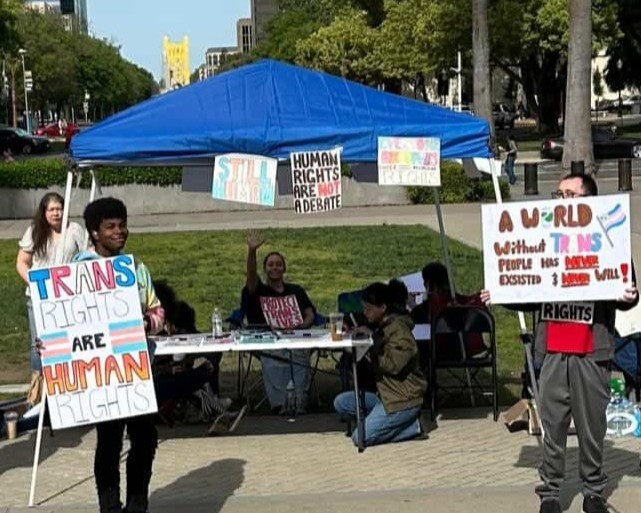
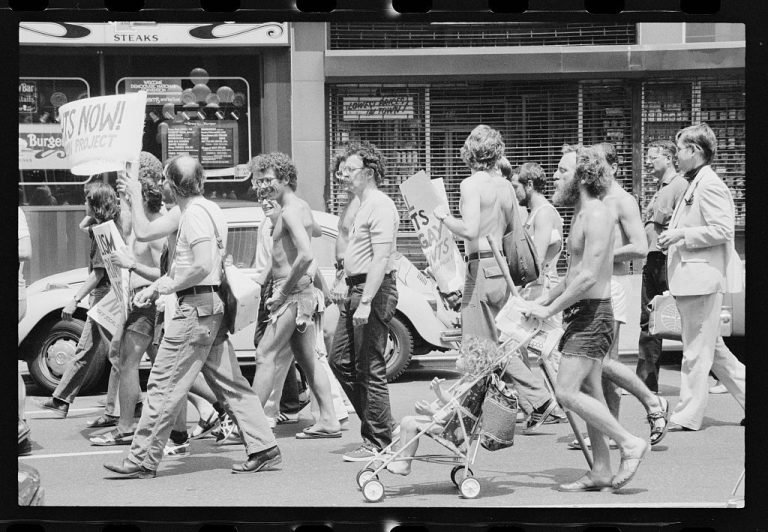
The calendar flips to June and the world explodes in a kaleidoscope color. Streets are painted with vibrant rainbows, love and acceptance abound, parades, parties, and Target launches another half-assed “Pride Collection”. It’s hard to imagine a world without these things we now associate with Pride. Before all of the celebration, there were hundreds of years of advocates, fights, and people just living their lives as they wanted. Some louder than others, some we may never know.
Before the pride flag was created, even before the brutal police raids and Stonewall uprising, there were those we now know as pioneers of LGBTQ+ and Pride history.
“I love, & only love, the fairer sex & thus beloved by them in turn, my heart revolts from any other love than theirs.” Anne Lister (1821)
LGBTQ+ history is variably impossible to trace back to a single origin. One notable figure, born Anne Lister in 1791, was a business(wo)man, landowner, and coined “first modern lesbian.” Anne was also known to be more masculine presenting and rejecting gender normative. Some previous partners would refer to them as, “Fred”, and locals endeared them with the nickname “Gentleman Jack.” Because of people like Lister who kept records of their life, historians can continue to promote the study LGBTQ+ history to ensure it can never be denounced or forgotten.
Those who brave(d) public backlash and laws against cross-dressing and “gender nonconforming behaviors”, have always and will always exist.
Although transgender is a modern term, appearing in the mid 1960’s, the idea and desire to change one’s gender, or refuse to choose one, is far from a new concept. Throughout history, there has been an overwhelming abundance of people stepping outside of their gender roles. Men acting as women in Shakespeare plays, women taking on a male persona to fight in the Civil War, and the feeling of general distaste for being crammed into a box with a label slapped on it, is truly evergreen.
As the LGBTQ+ community grew, so did the opposition. Laws, regulations, social constructs were created and strengthened by fear and hate of something they didn’t understand. But, the community kept living and fighting. On January 1st. In 1962, Illinois became the first state to legalize homosexuality. Slowly, more states began to follow. New York City, site of the notorious Stonewall uprising, didn’t decriminalize same-sex relationships until 1980.
On June 28, 1969, The Stonewall Inn, New York City reached a breaking point. The famously popular gay bar was not unfamiliar with police raids. Several similar events had happened prior to the notorious Stonewall uprising: Police attacked, and they fought back. Not just at the Stonewall, but at several other queer bars in the city. However, the events that unfolded just after midnight at that bar, became what would be one of the most notorious events in history. During another targeted raid, patrons and nearby supporters fought back. Six days of fighting for themselves, and for those who come after. Little did they know, they sparked a movement.
This was never a riot, it was a demand for justness and a cry for integrity and peace for their community.
“It was a rebellion, it was an uprising, it was a civil rights disobedience-it wasn’t no damn riot.” -Stormé DeLarverie, participant in Stonewall (1969)
News of that event spread far and wide. Reaching those who never knew there were others like them. People began to see they were not alone, and walls began to come down, people like Virginia Apuzzo, of Riverdale, NY, was 28 at the time of the Stonewall uprising.
“I was very, very curious. Before I entered the convent at age 26, I’d had two lovers and knew I was a lesbian, but I tried to play by the rules. I thought I’d have to live my life with this deep dark secret.” (PBS)
One year later, the first pride march was held on June 20th, 1970 in NY where an estimated 5k participants attended.
“Thousands of homosexuals went to the streets to demonstrate against centuries of abuse….from government hostility to employment and housing discrimination, Mafia control of Gay bars, and anti-Homosexual laws” Christopher Street Liberation Day Committee Fliers, Franklin Kameny Papers (Metcalf)
Today, we continue the fight. Although the same-sex relationships are no longer illegal in any US states, rights to marriage, housing, jobs, and healthcare, especially for transgender and nonbinary individuals, continues to be up for debate. Especially under the current administration, the future is uncertain. Many LGBTQ+ individuals are forced to live hidden and in fear.
However, with the boom of social media bringing the ability to connect and share stories, the support grows and the hate is slowly extinguished. Modern activists like Dr. Rachel Levine, Lady Phyll, Mauree Turner, and countless others are in this with us, every day. As long as there is kindling fueling the fire, we can keep swinging back.
Pride month is more than which flag you are, who you love, or how much body glitter from June you’re still finding in December. Every year is a mile marker. Every person who can feel a sense of love and community for the first time is a win. This month is a reminder that you are not alone. It’s a reminder and a celebration whether this is your first or 40th pride, out or closeted, at a city-wide parade or online. The point of pride is community.
So, if you can, slap on that rainbow bumper sticker, blast “Born this Way” and flip off some homophobes this pride month, as a treat.
The road is rough and unpaved, but the path is clearly lit and so we march on.
Sources:
-
- PBS. “Who Was at Stonewall? | American Experience | PBS.” Www.pbs.org, www.pbs.org/wgbh/americanexperience/features/stonewall-participants/.
-
- Metcalf, Meg. “Research Guides: LGBTQIA+ Studies: A Resource Guide: Stonewall Era and Uprising.” Guides.loc.gov, guides.loc.gov/lgbtq-studies/stonewall-era#s-lib-ctab-24103782-0.
-
- “Anne Lister’s Story: Department of English – Northwestern University.” English.northwestern.edu, english.northwestern.edu/about/anne-lister-society/story.html.
-
- Library of Congress. “Today in History – June 28.” The Library of Congress, 2015, www.loc.gov/item/today-in-history/june-28/.
- AHA. “What Is Trans History? – AHA.” AHA, 9 Apr. 2024, www.historians.org/perspectives-article/what-is-trans-history-from-activist-and-academic-roots-a-field-takes-shape-may-2018/.